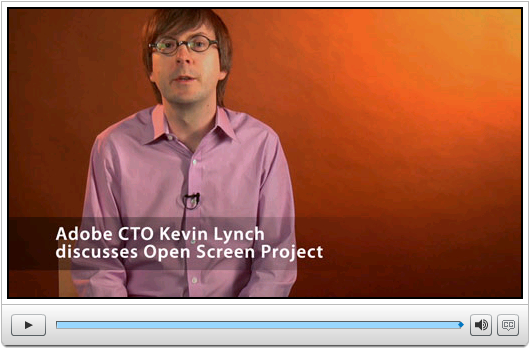
Adobe CTO Kevin Lynch discusses the Open Screen initiative and explains the reason for the discontinued licensing requirements for using SWFs in the mobile platform. Also of great interest to those reading between the lines, Kevin describes the AIR (Adobe Integrated Runtime) initiatives with the phrase “desktop and devices”. We’ve been left to speculate about “AIR Lite” since none of our contacts at Adobe will spill any details. In essence though though an AIR Lite offering would allow Flash apps to run on mobile devices outside of a browser.
Add this to digg, del.icio.us, etc.
HTC has released a promotional video of the new HTC Touch Diamond user interface. The device boasts touch input and an accelerometer with HTC’s TouchFlo 3D rendering. The Windows Mobile 6 device will hit shelves any week now in the UK. The product is slated for the US later this year.
Add this to digg, del.icio.us, etc.
At last years’ JavaOne conference Sun Microsystems announced its entry into the presentation layer technology race. JavaFX Mobile will compete with Qualcomm’s uiOne, Adobe’s Flash Lite and Microsoft’s SilverLight.
From the AndroidGuys blog “…Earlier this week, Sun announced details for the forthcoming JavaFX Mobile and even demonstrated it with an Android prototype. Targeting multimedia phones, it will be part of a few planned JavaFX stacks due from the company. Typically, most phones running Java rely on the language for user-installed applications. For JavaFX Mobile however, it will have Java running behind everything from the user interface (UI) toolkit to the telephony, media, and browser software. Ideally, you’ll have the same experience with desktops, mobile devices, set-top boxes, and even automobile dashboards.”
Add this to digg, del.icio.us, etc.
Adobe’s investor relations call this week discussed the question of Flash for Apple’s iPhone. Get the inside information from Adobe’s Flash evangelist, Bill Perry.
Add this to digg, del.icio.us, etc.
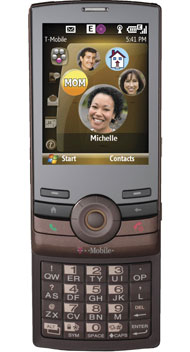 David Pogue, New York Times consumer tech writer, has written a candid article first praising and then trashing the T-Mobile Shadow.
Pogue outlines the newish environment created when T-Mobile and an ex-Apple designer partner to design a device with some great innovative features and then taken the third-party manufacturer (apparently HTC is the manufacturer, if ZDNet is correct) out of the picture and designed their own device; rethinking a few key features. The list of praise is impressive including a rethought click-wheel for scrolling plus directional buttons for up, down, left, right selections and a Blackberry Pearl style keypad licensed from RIM. But then, Pogue says, “you turn it on.” You see, its fatal mistake is it’s running Windows Mobile 6.
Pogues’ rant reminds me of my own review of the Windows Mobile 5 Samsung Blackjack.
Add this to digg, del.icio.us, etc.
Symbian seems to be in the first stage of grief over Android, Google’s new operating system for mobile. From an article by the BBC: “Google’s dominance of the web will not translate to the mobile phone market, a senior executive at Symbian has said.”
From the Symbian exec:
“About every three months this year there has been a mobile Linux initiative of some sort launched.
“It’s a bit like the common cold. It keeps coming round and then we go back to business. We don’t participate in these full stop. We make our own platform and we are focused on driving that into the mobile phone market at large ever more aggressively.”
And two paragraphs later:
“Meanwhile, the head of Nokia in the UK said the firm was in discussions with Google about using the platform.”
Read the BBC News article.
Link via Slashdot.
Add this to digg, del.icio.us, etc.
We only notice tectonic plates when enough tension gets released as an earthquake. (Yes, I’m in California, and yes we had a 5.3 the other day.) The trend toward openness and toward user choice is slow going, but we don’t feel it until someone makes a big announcement like Google’s this week.
The shift is happening. Apple’s iPhone launch was a big deal, proving that a device manufacturer can play first fiddle in the US mobile industry (and AT&T isn’t complaining that 40% of iPhone buyers are new subscribers) and more importantly, proving that a device’s user experience can lead every part of the conversation; within the industry and with consumers.
Google’s announcement feels like a corollary to Apple’s. It adds evidence that a non-carrier can wrangle support from across the mobile industry (handset and chip OEMs, carriers, platform developers) to create an open platform.
Google’s announcement has interesting possibilities. What will device manufacturers come up with if they don’t have to pay Microsoft (or anybody else) for their OS? What will the carriers create if they didn’t have to pick from the pros and cons of the various OSs, but if they had the ability to write their own branded UI for a line of devices? What will the third party application developers be able to do with a more open, internet-powered approach (as is starting to happen on the Apple front, but that’s another debate.) What will content providers create for users if Google can prove an ad-subsidized mobile model will work?
Someday we’ll all look back and remember how cute Google was when it was just a little rainbow logo search field staring at you from a blank page.
Add this to digg, del.icio.us, etc.
Mobile phones based on Google’s software are not expected to be available until the second half of next year. They will be manufactured by a variety of handset companies, including HTC, LG, Motorola and Samsung and be available in the United States through T-Mobile and Sprint.
The phones will also be available through the world’s largest mobile operator, China Telecom, with 332 million subscribers in China, and the leading carriers in Japan, NTT DoCoMo and KDDI, as well as T-Mobile in Germany, Telecom Italia in Italy and Telefónica in Spain.
link:
http://www.nytimes.com/2007/11/05/technology/05cnd-gphone.html?hp
Add this to digg, del.icio.us, etc.
From the Economist this week (edition: 10/27-11/2):
“Another winner from the launch of the iPhone was AT&T, which is the exclusive carrier for the device in the United States. Its quaterly net-profit rose by 42% compared with the same period last year. Around 40% of iPhone subscribers were new customers to AT&T.”
Add this to digg, del.icio.us, etc.
Officials in India are using ringtones of moos and bleats to lure and trap leopards. Apparently “forest guards” have found ringtones are safer and more cost effective than luring the cats with live cows and goats for bait. Read the Reuters story>.
(Thanks Laine Fast for the link.)
Add this to digg, del.icio.us, etc.